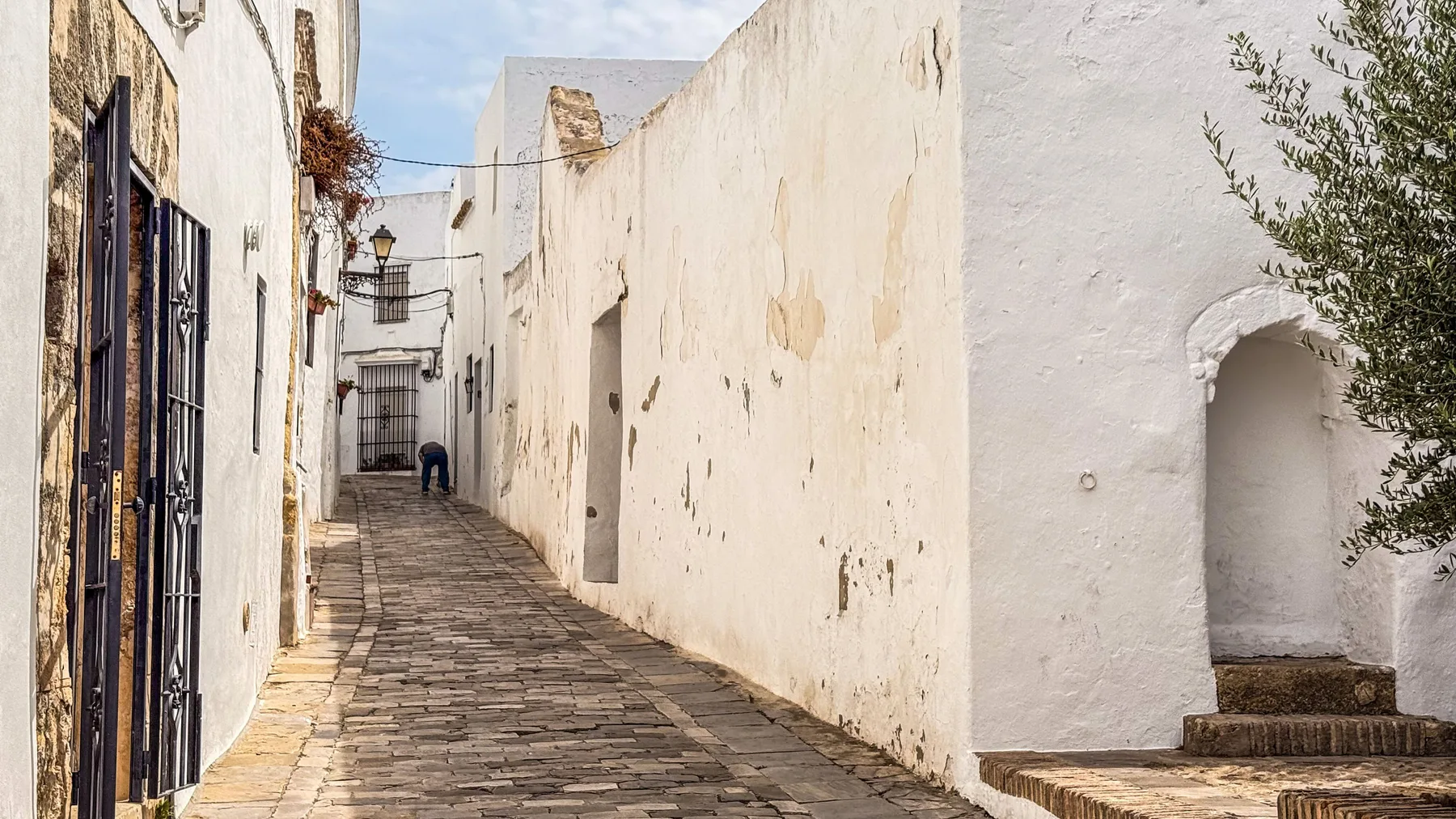
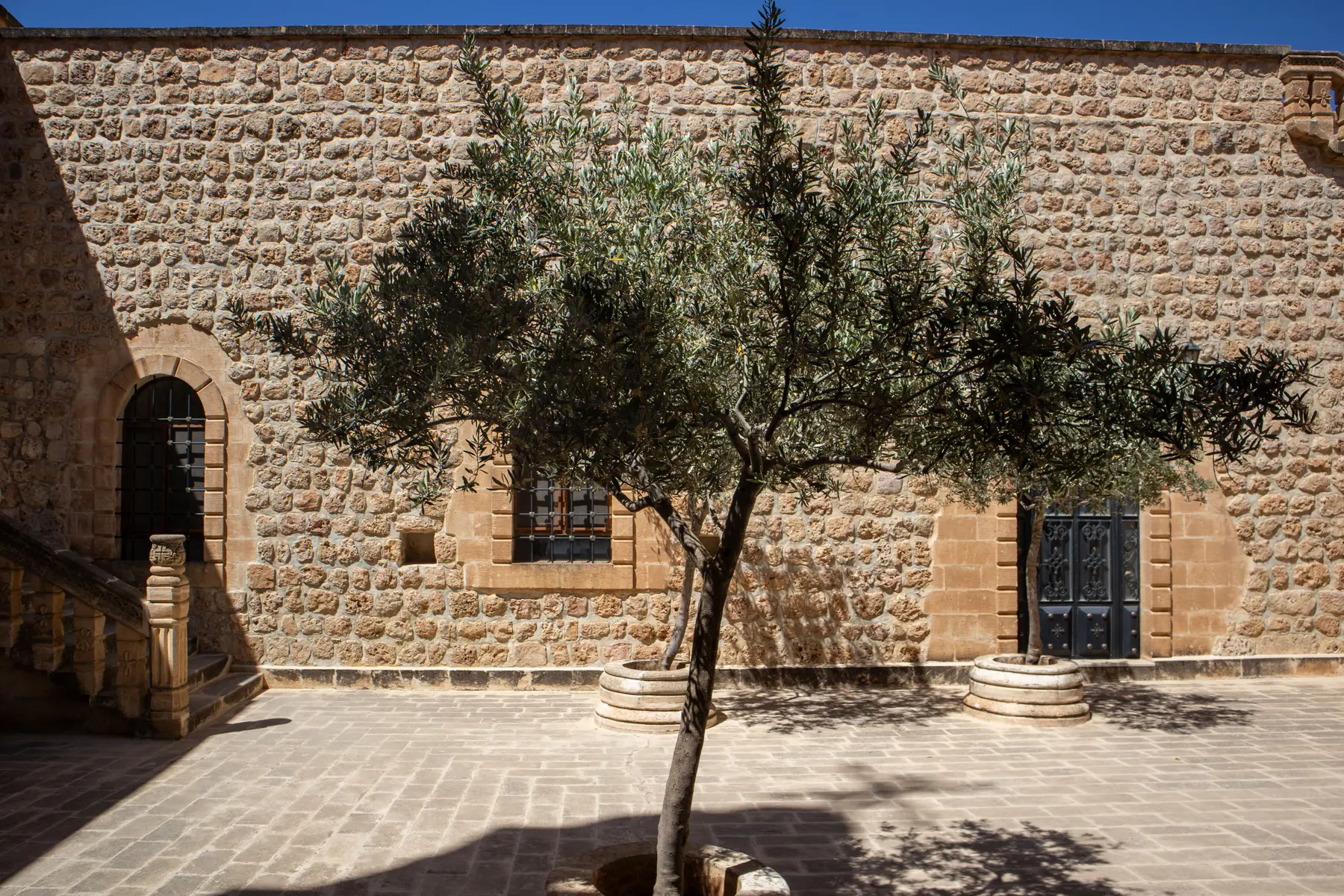
The courtyard is the whole argument. You come up through the old town, along a lane too narrow for a car, through a door that gives no indication of what is behind it, and then the building opens into a stone square with a single olive tree in it and the plain falling away beyond the parapet.
Sarnıç Konak is a nineteenth-century merchant’s house that spent most of the last fifty years empty. The restoration, finished four years ago, was done slowly and — this is the unusual part — without adding very much. The walls are the walls. The floors are the floors, relaid. There is no spa, no restaurant with a consultant chef, and no lobby music.
The rooms
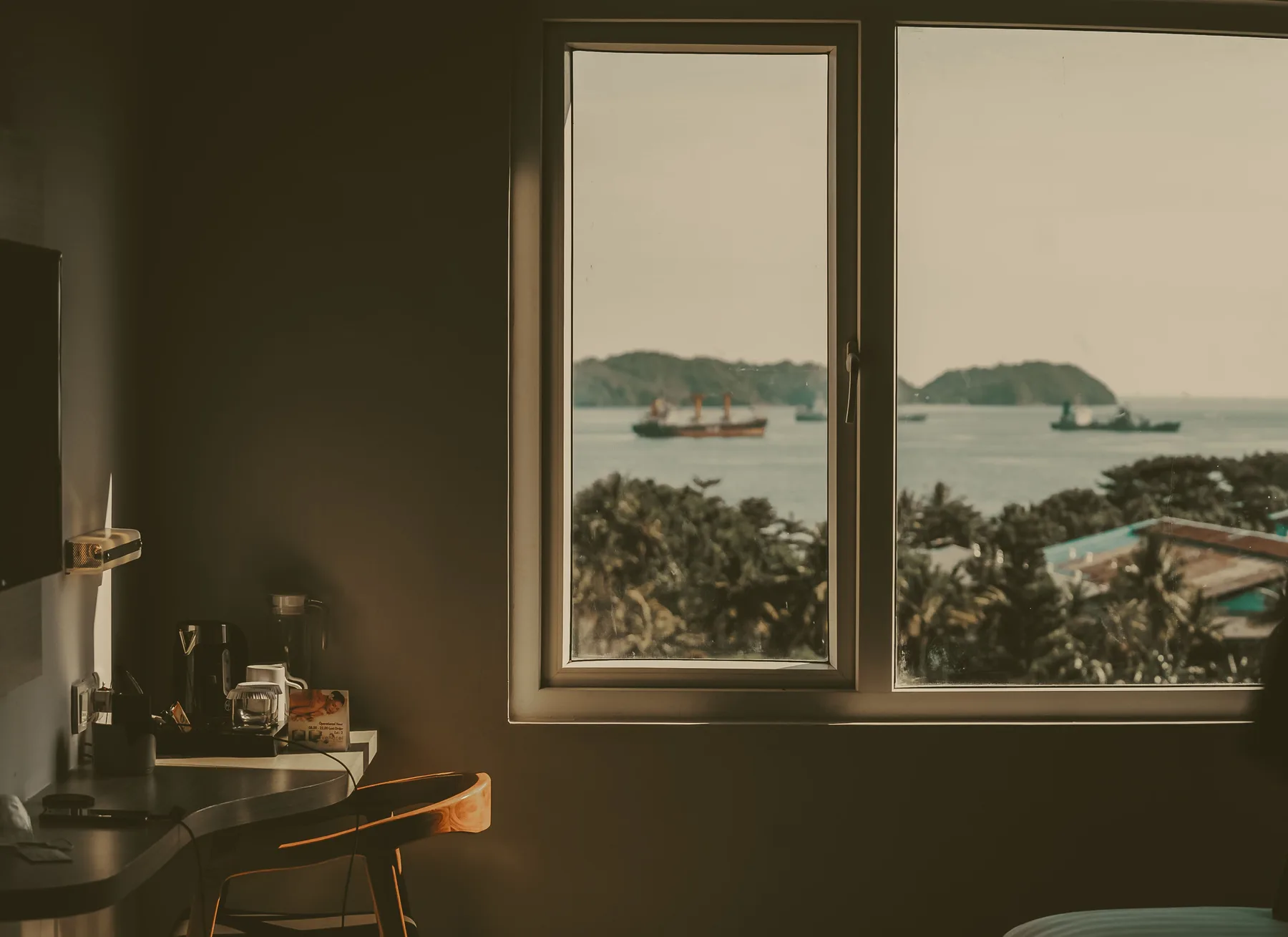
Eleven of them, no two alike, all cut from the same limestone. Ours was on the second terrace: a vaulted ceiling, a deep window seat in a wall nearly a metre thick, a bed facing east because the sunrise over the plain is the reason to be here.
What is good: the stone keeps the room cool until well into the afternoon without air conditioning, the linen is heavy and properly laundered, and the bathroom is generous in a way that restored buildings usually cannot manage.
What is not: three rooms are reached only by open stone stairs, which is a genuine problem in rain and an absolute one for anybody with limited mobility. There is no lift and there never will be. Ask which room you are being given before you book.
Nothing here has been added to make you comfortable. The comfort is in what was left alone.
Food
Breakfast is the meal they care about, and it is very good: nine or ten small plates, local cheeses, a wheat and lamb dish that arrives without explanation, and coffee made properly rather than efficiently. It is served in the courtyard until the heat makes that impossible, then indoors under the vault.
There is no dinner service. This is presented as a limitation and functions as a favour — the town’s own restaurants are five minutes’ walk away and considerably better than anything an eleven-room hotel could sustain. The staff will book for you and will tell you honestly which places are worth it.
Service
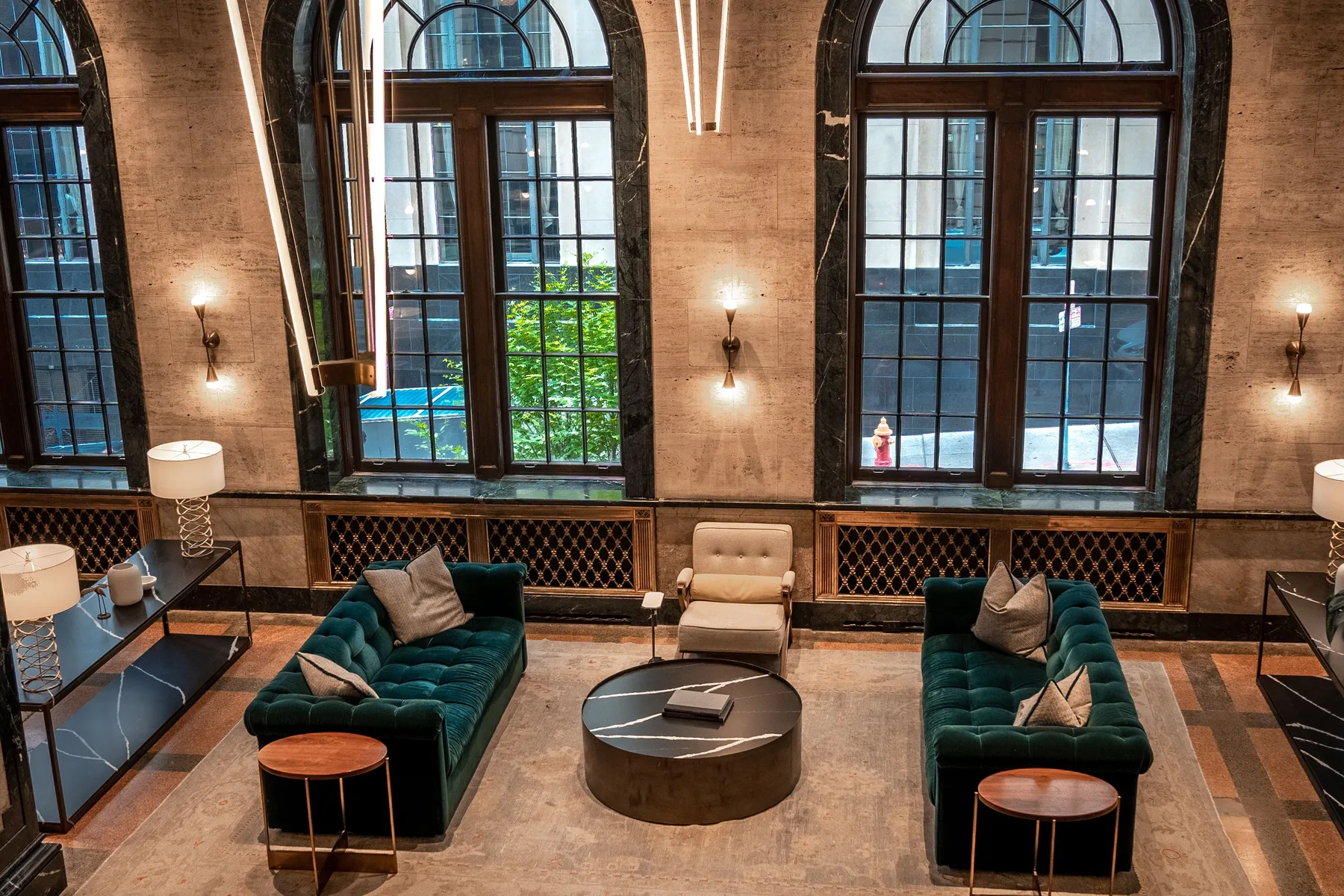
Family-run, four staff, no front desk in the ordinary sense. Requests are made to whoever is in the courtyard. This works because the family are genuinely present and does not work if you want the anonymity of a larger hotel — you will be asked how your day was, and an answer will be expected.
What it costs
Rates are moderate for what is effectively a private house with staff, and drop sharply outside April–May and September–October, which are the two windows when the region’s climate is kind. In July the plain is punishing and the hotel half-empties; in January it can be genuinely cold and several rooms are taken out of use.
Verdict
A rare thing: a restoration confident enough to stop. Stay three nights rather than one, take the room facing east, and do not expect to be entertained.