The Atacama is sold on an absence: no cloud, no water, no light pollution, no interruption. Agencies build entire itineraries around that absence, and for ten months of the year they are right to.
Then comes what the region calls the invierno boliviano — the Bolivian winter — and for a few weeks in the southern summer, moisture pushes over the Andes from the east and the driest place on earth gets weather. Roads to the high lagoons close without notice. Stargazing tours are cancelled at four in the afternoon by a guide reading a satellite loop on his phone. Half the reason people came evaporates.
The other half arrives.
What the cloud does to the altiplano
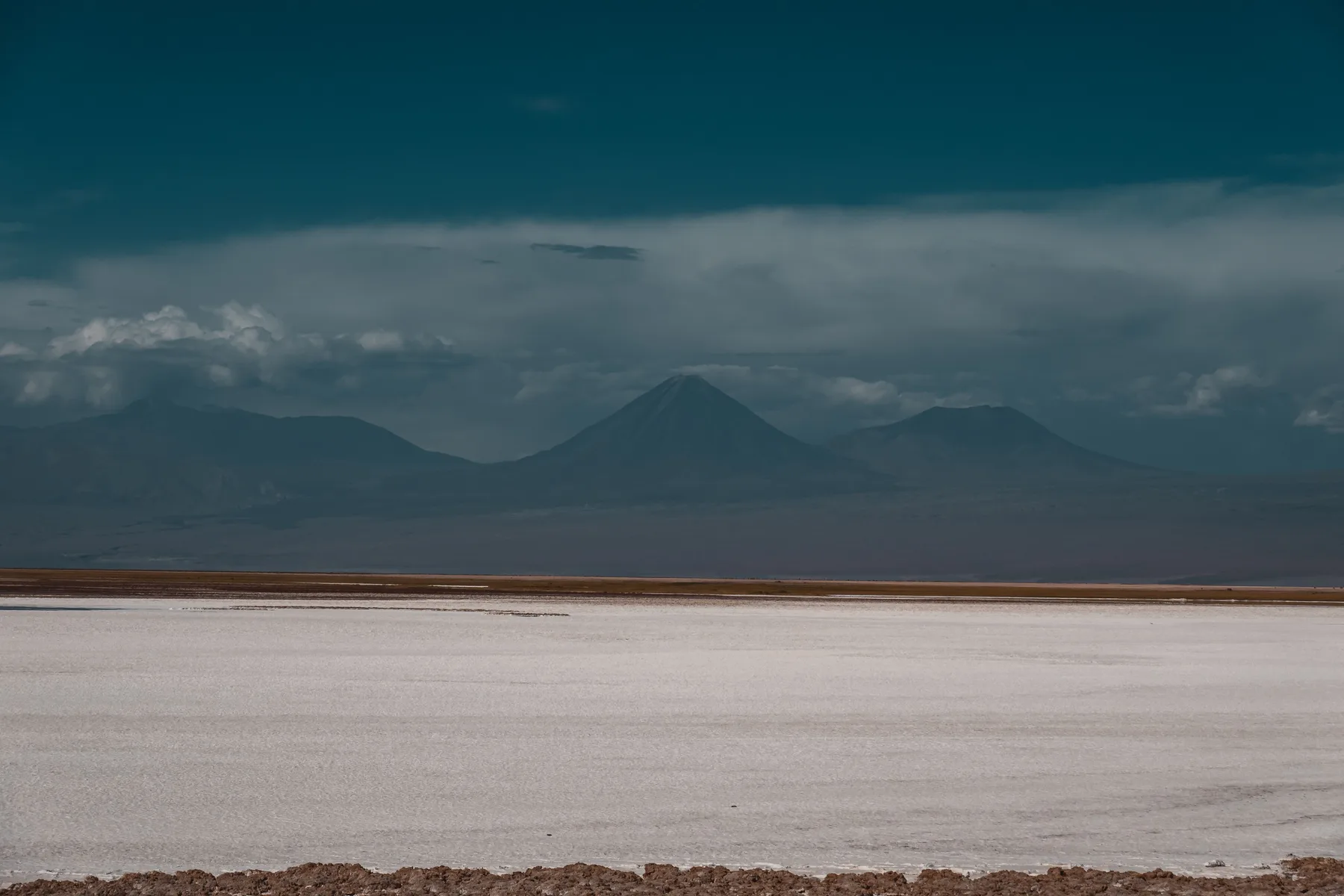
At four thousand metres the sky is not above you in the ordinary sense; it is around you, at eye level, moving. When a storm builds over the cordillera, the light stops being desert light — flat, white, merciless — and becomes something closer to a Dutch painting: a dark ceiling, a hard silver band on the horizon, and single shafts falling on volcanic cones sixty kilometres apart.
The colour of the ground changes too. Dry, the altiplano reads as beige and rust. Under a wet sky it goes plum, ochre, near-black in the shadow of a cloud, and the salt flats turn into a mirror thin enough to walk on.
Ten months of the year the desert shows you everything at once. For two weeks in February it shows you one thing at a time, and only briefly.
The cost, stated plainly
This is not a soft recommendation. Going in February means accepting a real chance that the single thing you most wanted will not happen.
The observatories close when there is cloud, and there is cloud. The Bolivian border crossings and the routes to the highest lagoons shut for days at a time when the unsealed roads wash out. Afternoon lightning at altitude is genuinely dangerous, and any guide worth hiring will turn you around early rather than argue about it.
What you get in exchange: a third of the visitors, rooms at rates the town never publishes in October, and a landscape doing something it does not do in the postcards.
Altitude is the real constraint
Nothing about this trip is improved by rushing. San Pedro sits at 2,400 metres and the day trips climb past 4,300. Give yourself two full nights at town level before going high, drink more water than feels reasonable, and treat the first headache as information rather than an inconvenience.
Guides in the region are, on the whole, unusually good about this. If yours suggests turning back, they are not being cautious on your behalf; they are reading something you cannot.
Verdict
If you have one week and one chance at the Atacama, go in May and see all of it. If you have been before, or you would rather have four extraordinary hours than seven predictable days, February is the month nobody will recommend to you.