
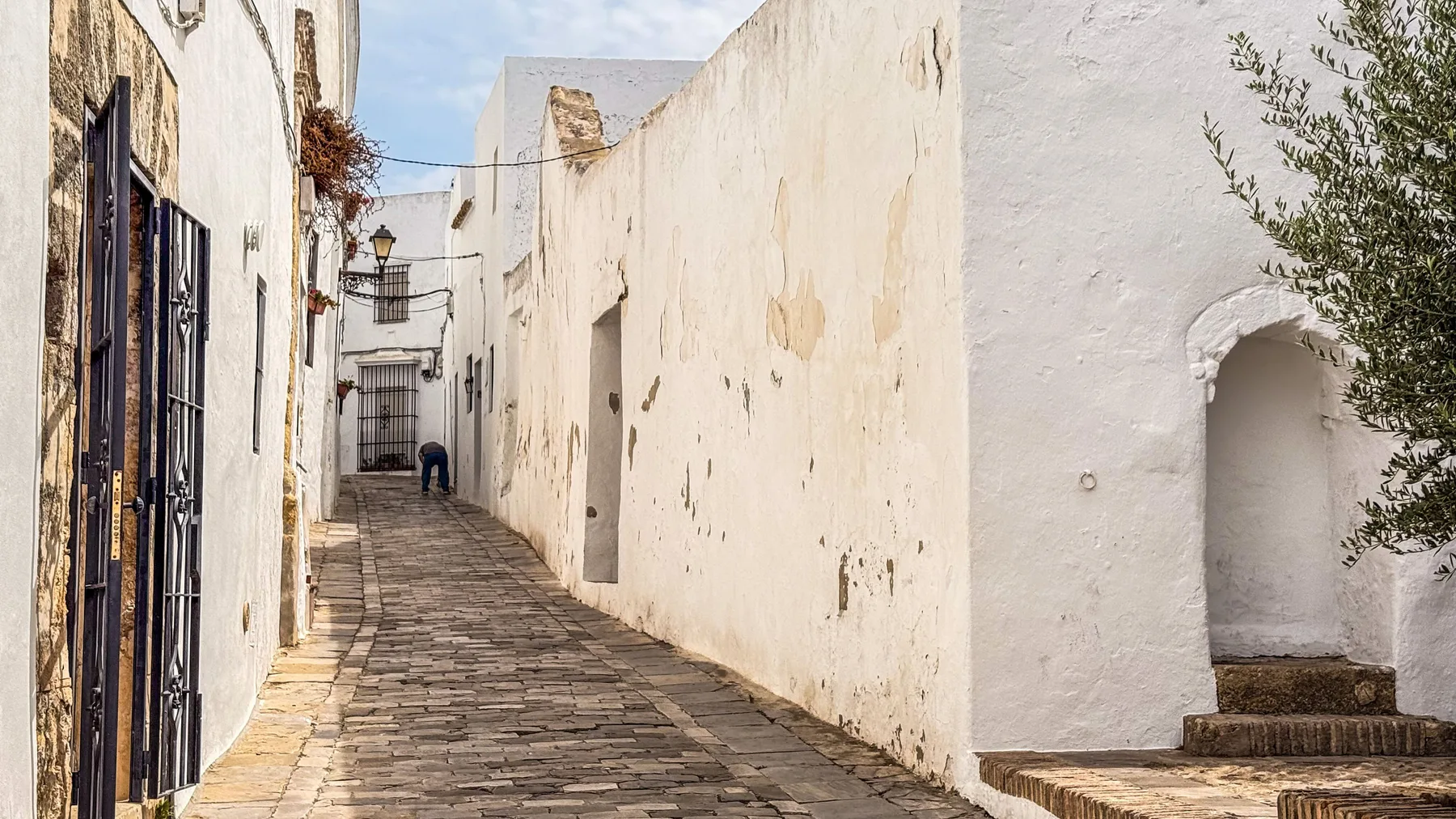
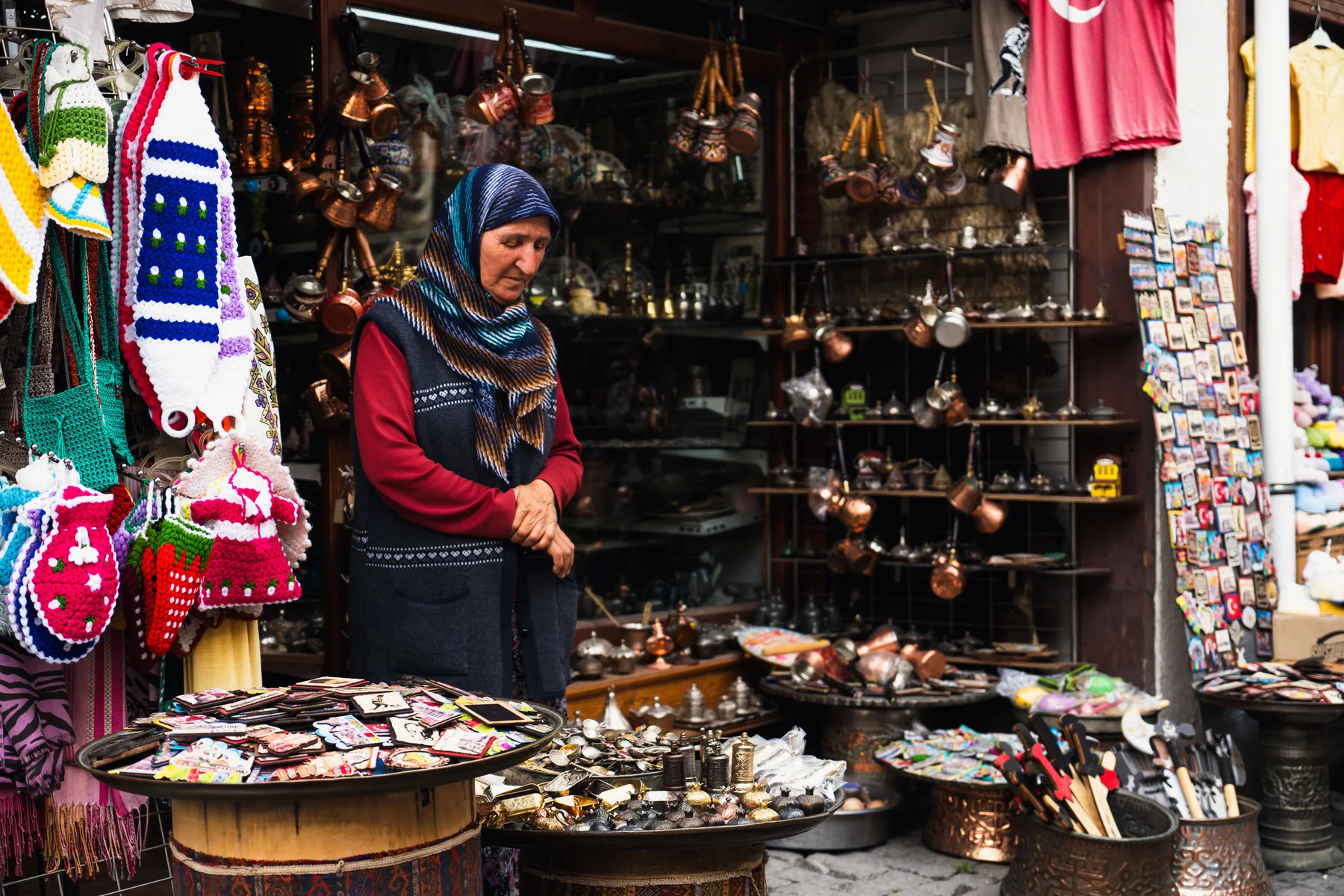
The street is still called the coppersmiths’ street. There are, by the count of the woman who has traded here for thirty-one years, four coppersmiths left on it, and only one of them still makes anything.
The rest of the lane sells what covered markets everywhere now sell: lamps assembled from parts, scarves in a weave that has never been local, spice cones built into shapes that do not survive being packed. It is not fraudulent, exactly. It is simply the trade adapting to what walks past.
What is actually made here
Her stall is four metres wide and stacked to the ceiling. Most of what is on display was not made by her — she is honest about this without being asked, which is itself unusual — but the pieces on the lower left shelf were, and they are visibly different: heavier, less regular, the hammer marks running in a direction that a spinning lathe cannot produce.
A tinning pot sits at the back. Copper cookware has to be re-lined every few years, and re-lining is now most of her work. Households in the surrounding streets bring pans in, she strips and re-tins them, and they come back in a decade. It is not a business that scales, and it is the reason the stall still exists.
People come to photograph a craft. They very rarely come to have anything mended, and mending is the craft.
The economics, which nobody puts in the caption
A hand-raised pan takes her the better part of two days. A machine-spun equivalent, imported, arrives at the stall next door for a twentieth of the price and looks similar in a photograph. Visitors, understandably, buy the one that fits in the bag.
She does not seem bitter about this. She points out — twice, in slightly different words — that the market has always sold what could be sold, and that the picturesque version of it, the one where every stall makes its own goods, lasted about as long as any other trading arrangement and then stopped.
How to be a decent visitor here
Three things, all of which she volunteered.
Ask before photographing, and accept no as an answer without negotiating. Buy something, even something small, if you have spent ten minutes in a stall — the time is the cost, not the goods. And if you want to know whether a piece was made locally, ask what it weighs, then pick it up.
The question that separates the made from the imported is not where it comes from. It is how heavy it is in the hand.
Where the craft went
Not far, as it turns out. Two of the workshops that used to be on the lane moved to an industrial unit twenty minutes out of the centre when the rent here went to tourist rates. They are still working, still hand-raising, and they now sell almost entirely to restaurants and to a small export trade.
There is a version of this story in which that is a tragedy. Standing in the unit, watching four people work in decent light with the door open, it reads more like a relocation. The romance stayed on the lane. The craft went where it could afford the rent.
Going
The market is open six days a week and is at its worst between eleven and three, when the tour groups pass through in a continuous stream. Come at eight, when the shutters go up and the sellers are drinking tea, or in the last hour before closing. Both are quiet, and both are when anybody will actually talk to you.